

Written by James Savage – Managing Director
What is Nutrient Neutrality?
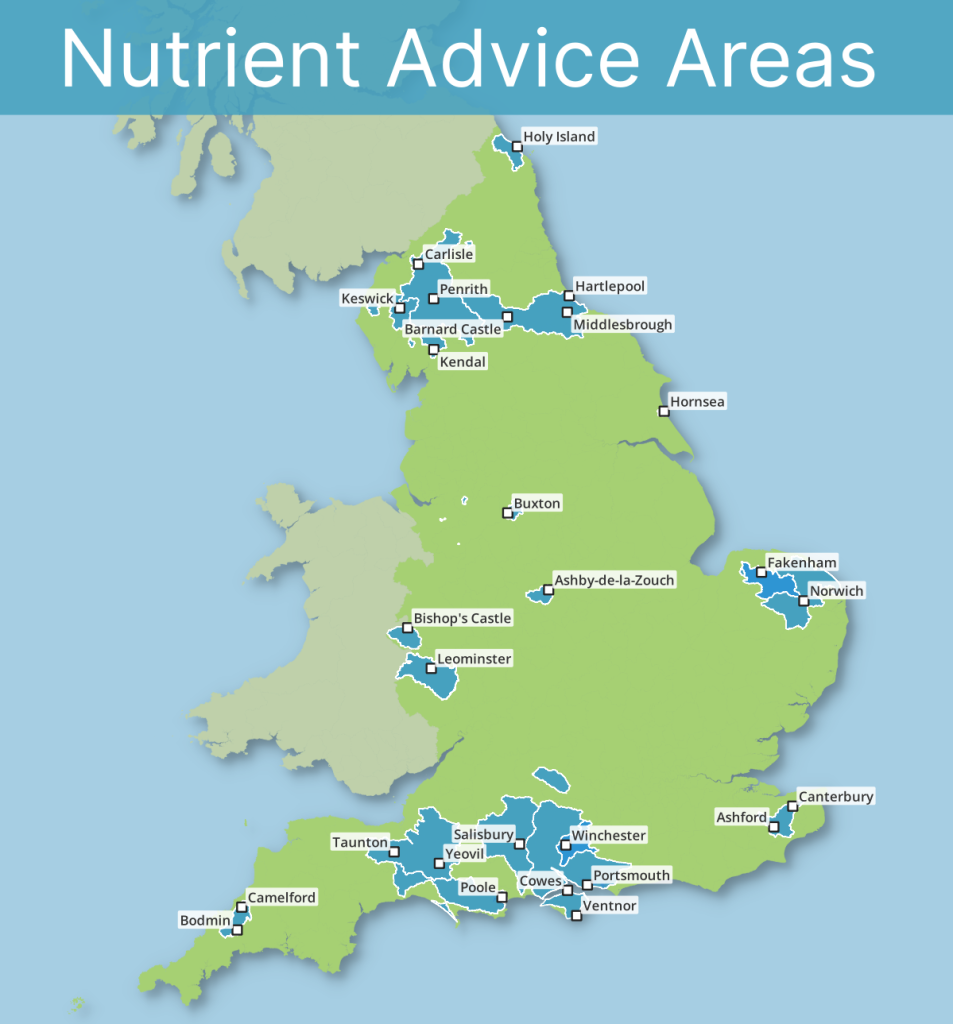
Nutrient neutrality is a planning requirement in parts of England where protected river catchments are already under environmental stress. In these areas, new development must demonstrate that it will not increase levels of nutrients — primarily nitrogen and phosphorus — entering designated water bodies. The requirement applies to both the construction and operational phases of development and is now a common consideration for residential, commercial and mixed-use schemes. The requirement applies to both the construction and operational phases of development and is now a common consideration for residential, commercial and mixed-use schemes.
Why is Nutrient Neutrality an Issue for Development?
For developers and landowners, nutrient neutrality can introduce significant uncertainty and risk if not addressed early. Common challenges include:
- Planning delays while mitigation strategies are identified and agreed
- Increased costs associated with land, credits or long-term management
- Programme risk where mitigation relies on third-party land or providers
- Technical complexity due to catchment-specific guidance and evolving policy
Without a clear strategy, nutrient neutrality can become a critical barrier to securing planning consent.
Common Nutrient Mitigation Options
There is no single solution to nutrient neutrality. The most appropriate approach will depend on site location, scale, catchment rules and local authority expectations. Typical mitigation routes include the following.
On-Site Natural Treatment Solutions
These include measures such as constructed wetlands, reed beds and enhanced SuDS features designed to remove nutrients before discharge.
Advantages
- Integrated within the development
- Strong sustainability and biodiversity benefits
Considerations
- Land take requirements
- Long-term maintenance and management obligations
Off-Site Land-Based Mitigation
This approach involves taking land out of intensive agricultural use to reduce nutrient inputs to the catchment. Common examples include conversion to low-input grassland, habitat creation or woodland.
Advantages
- Flexible and scalable
- Can support wider environmental objectives
Considerations
- Requires land control and legal agreements
- Nutrient reductions must be secured for the lifetime of the development
Nutrient Credit Schemes
In some catchments, developers may purchase nutrient credits from approved providers to offset the calculated nutrient load of a development.
Advantages
- Can provide a quicker route to planning in certain areas
Considerations
- Limited availability in some catchments
- Market pricing and long-term certainty can vary
Foul Drainage and Water Efficiency Measures
Optimising the foul drainage strategy can sometimes reduce the overall nutrient load. Measures may include higher-performance wastewater treatment connections or enhanced water efficiency standards.
Advantages
- May reduce the scale of mitigation required
Considerations
- Rarely sufficient as a standalone solution
Key Considerations for Developers
When dealing with nutrient neutrality, early and integrated decision-making is essential. Key points to consider include:
- Address nutrient neutrality at feasibility stage, not post-submission
- Catchment-specific rules and assumptions must be followed
- Mitigation must be secured in perpetuity through legal mechanisms
- Drainage, planning and environmental strategies should be aligned
How We Support Nutrient Neutral Development
Schema Engineering supports clients through the full nutrient neutrality process — from early feasibility assessments and nutrient calculations through to drainage strategy design and mitigation delivery.
By addressing nutrient neutrality early, we help reduce planning risk, protect programme certainty and support sustainable development outcomes.
If you are considering development within a nutrient-sensitive catchment, early advice can make a measurable difference.