

Written by James Savage- Managing Director
Latest Drainage Design Standards in the UK – What Developers & Designers Need to Know
Drainage design standards in the UK have continued to evolve in response to climate change, flood risk pressures and sustainability requirements. In 2025, updated national Sustainable Drainage Systems (SuDS) standards were introduced, reinforcing the shift toward integrated water management and long-term resilience. For developers, architects and engineers, understanding these changes is critical for planning approval, Building Control compliance and long-term performance. Below is a breakdown of the key standards shaping UK drainage design in 2026.
National Standards for Sustainable Drainage Systems (SuDS)
In 2025, updated National SuDS Standards were issued for England, strengthening expectations around sustainable surface water management. The standards reinforce:
- A clear surface water hierarchy (infiltration, reuse, watercourse, sewer as last resort)
- Management of both ordinary rainfall and extreme storm events
- Integration of water quality treatment stages
- Delivery of biodiversity and amenity benefits
- Demonstrable whole-life maintenance strategies
The guidance aligns closely with the CIRIA SuDS Manual (C753), which remains the industry benchmark for SuDS design.
Why This Matters
Local Planning Authorities and Lead Local Flood Authorities are increasingly expecting:
- Betterment over greenfield runoff rates
- Clear climate change allowances
- Exceedance routing strategies
- Maintenance and adoption clarity
For residential and commercial developments across East Anglia and beyond, this has significantly raised the bar at planning stage.
Building Regulations – Approved Document Part H
At building level, GOV.UK Approved Document Part H governs drainage and waste disposal requirements in England. Part H covers:
- Foul water drainage design
- Surface water discharge hierarchy
- Pipe sizing and gradients
- Access and inspection chamber requirements
- Connection to public sewers
Building Control sign-off depends on compliance with Part H, but importantly — Part H compliance alone does not guarantee planning approval for surface water strategies. Planning and Building Regulations operate separately. This distinction is often misunderstood on projects.
Sewerage Sector Guidance (SSG) & Water Company Requirements
For any development proposing connection to the public sewer network, compliance with Sewerage Sector Guidance (SSG) and individual water authority standards is required. This typically involves:
- Section 106 sewer connection applications
- Hydraulic impact assessments
- Surface water discharge rate restrictions
- Adoption standards under Section 104 agreements
Early engagement with the relevant water company is now considered best practice.
Climate Change Allowances & Flood Risk Integration
Drainage design now sits firmly within the wider flood risk framework. Designers must consider:
- Environment Agency climate change allowances
- Flood Zone classification
- Surface water flood mapping
- Exceedance flow routing
On larger schemes, drainage strategy and flood risk assessment are no longer separate exercises — they must be fully integrated.
Key Trends in UK Drainage Design (2026)
Across the sector, we are seeing:
✔ Increased scrutiny at planning stage
✔ Greater emphasis on infiltration testing and ground investigation
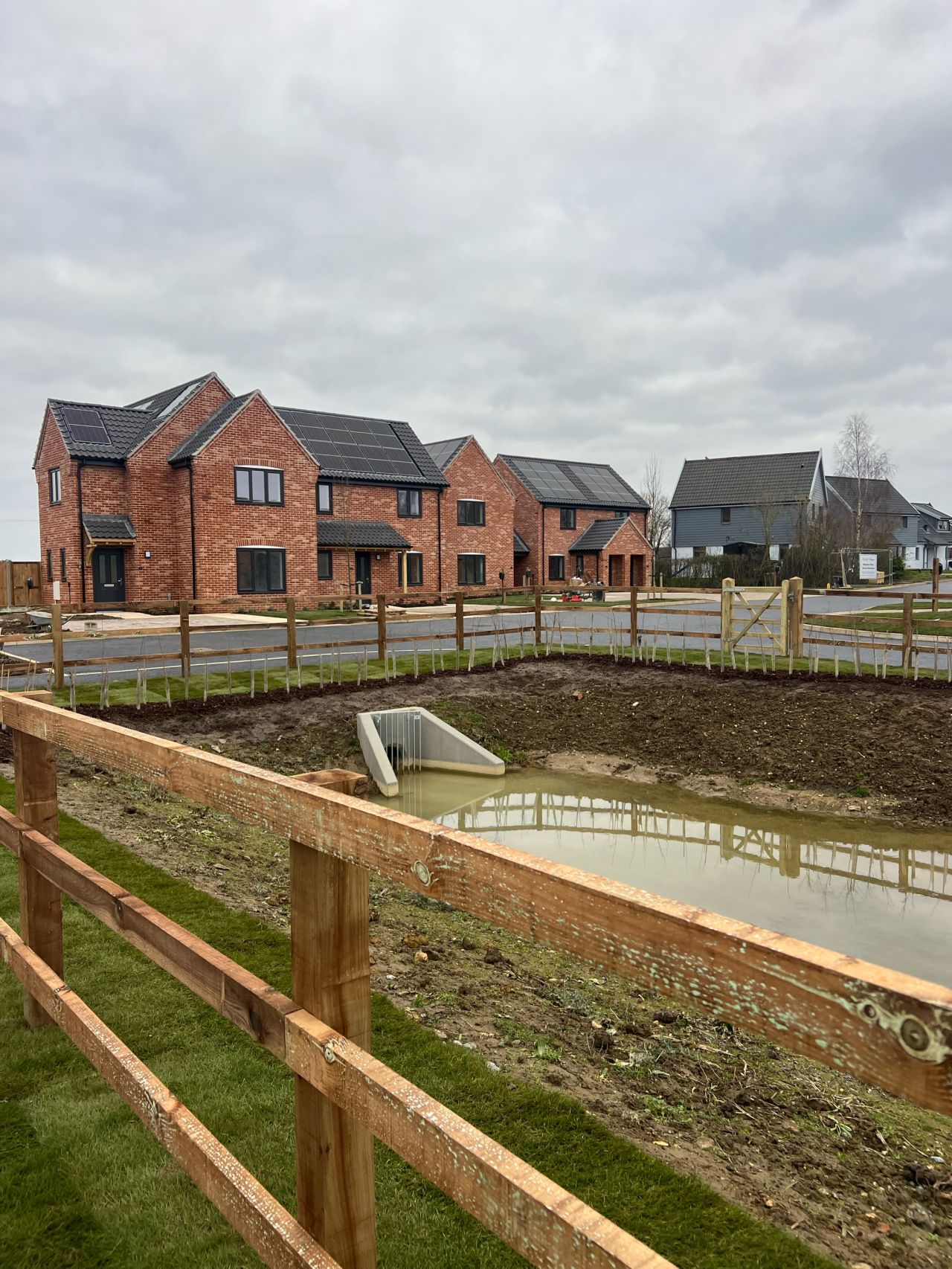
✔ More multifunctional SuDS (basins, swales, rain gardens)
✔ Stronger maintenance and adoption clarity
✔ Pressure to demonstrate biodiversity net gain alignment
Drainage is no longer just about pipes underground — it is about place-making, resilience and long-term asset performance.
Practical Advice for Developers
To avoid delays:
- Engage a drainage engineer early (pre-planning stage where possible)
- Undertake infiltration testing before finalising layouts
- Confirm discharge points early
- Align drainage with highways and level strategy
- Allow time for LLFA and water authority review
Late-stage redesign due to drainage non-compliance remains one of the most common causes of planning delays.
Final Thoughts
The UK drainage standards landscape continues to shift toward sustainable, climate-resilient and multifunctional solutions. Successful developments now require:
- Technical compliance
- Planning alignment
- Environmental integration
- Long-term maintainability
For developers and design teams, understanding the interaction between SuDS standards, Part H, water authority requirements and flood risk guidance is essential to delivering schemes efficiently and compliantly.
Delivering Compliant, Buildable Drainage Strategies
Drainage design should not be a late-stage compliance exercise — it should shape your scheme from day one.
At Schema Engineering Ltd, we support developers, architects and land promoters with:
– Pre-planning drainage feasibility advice
– SuDS strategy design aligned with 2025 standards
– Section 106 sewer connection coordination
– Surface water discharge negotiations
– Integrated drainage and highways design
– Planning-stage technical notes for submission
Whether you’re progressing a small residential scheme or a multi-phase development, early drainage input can significantly reduce redesign risk and programme delay.
If you have a live site or land opportunity that requires drainage input, speak to our team today.
📩 Contact us to discuss your scheme
📞 Or call to arrange a feasibility review meeting